CHF 5 off the first order
Subscribe to the newsletter and secure the discount.
Free shipping from CHF 75 (parcel delivery)
Headphones for Swiss Commutes, Offices, and Home
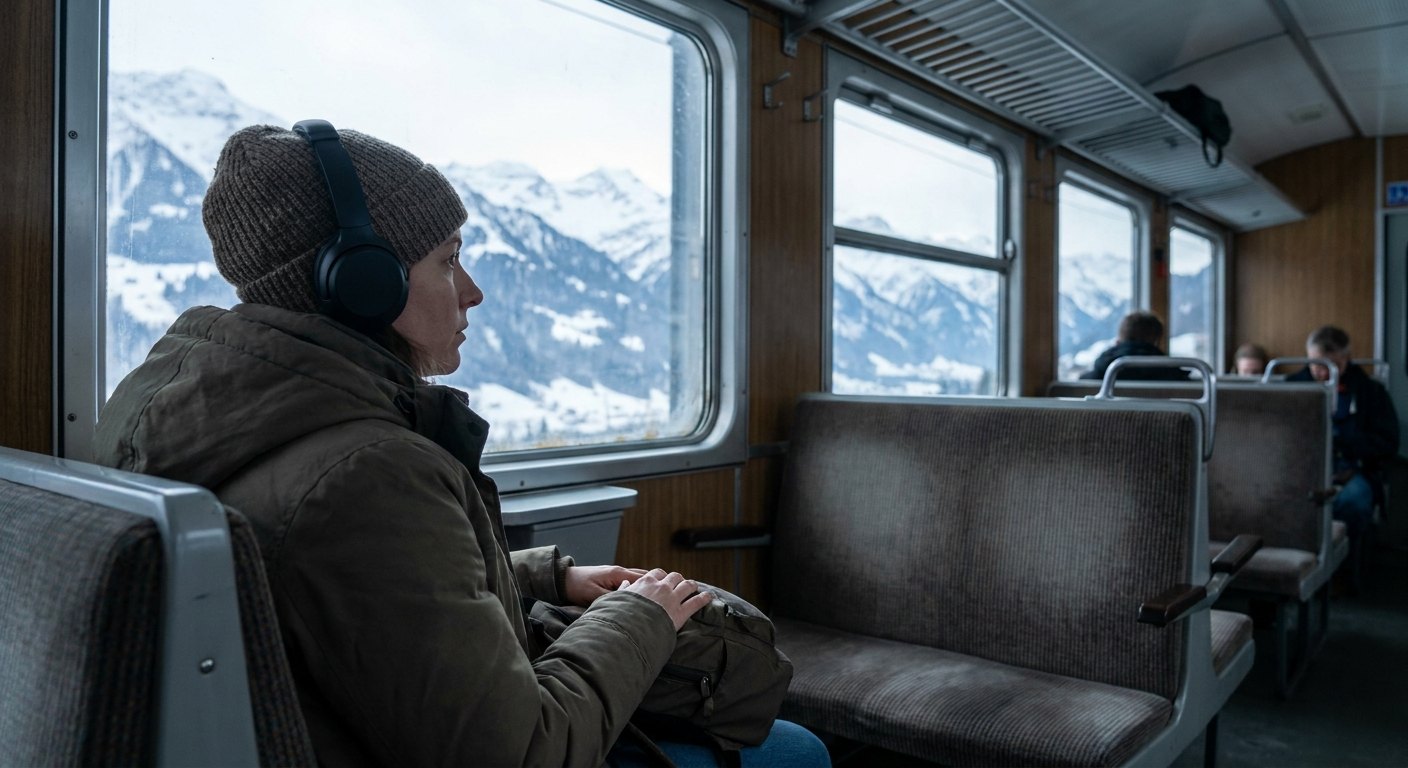
The 7:52 train from Zug to Zürich HB fills up fast, and by Baar most seats are gone. The ride takes about 25 minutes. Anyone commuting into a Swiss city centre for the first time notices two things quickly: the trains run on time, and everyone else already knows how to make the ride disappear. Good headphones are a large part of that trick, along with a laptop that survives the day and a desk that does not wobble.
Many new arrivals are still working remotely for an employer abroad, which means video calls at 8am for a Berlin office or at 4pm for one in New York. The right headset has to perform in three very different acoustic environments: a moving train, an open-plan office with thin partitions, and a rented apartment that was clearly not designed with home offices in mind.
On the train: battery life matters more than the marketing
Swiss regional trains sit around 70 dB at cruising speed, and a packed platform at Zürich HB during rush hour is louder still. Most of that rail rumble sits below 300 Hz, which is exactly the band active cancellation handles best, cutting it by up to 90%.
Active noise cancellation works, but only if the battery survives the whole week. A pair that promises 30 hours of playback on a single charge, with quick-charge support adding 5 hours from a 10-minute top-up, removes one more thing to remember before leaving the apartment. Two trips a day for five days already add up to more than 10 hours of listening.
A wide range of over-ear headphones covers this need with 40mm drivers that isolate better on trains than most earbuds, simply because they seal against the head rather than the ear canal. The trade-off is discretion. Over-ear cups are less subtle in a small kitchen where a flatmate is also on a call, and anything above 300 g starts to press on the jaw after the first hour.
Matching products


In the open-plan office: microphones and manners
Swiss offices lean towards open-plan layouts even in older buildings, and colleagues notice a hollow-sounding microphone faster than they mention it. A boom or beamforming mic that filters keyboard clatter above 2000 Hz makes a bigger difference in daily meetings than another decibel of noise cancellation. A busy open-plan floor hovers around 60 dB, roughly the level of a conversation two desks away, and that is the noise a microphone has to keep out of a call.
Bluetooth multipoint, letting one headset pair with both a phone and a notebook at the same time, is worth checking before buying, since switching devices mid-call is a common annoyance in shared offices. Indoors the usable range runs to roughly 10 m before syllables start dropping out. Wired headsets still have a place here. Some employers issue a corporate laptop with strict USB policies, and a simple 3.5mm cable avoids driver conflicts that Bluetooth sometimes causes.
At home: the apartment changes what headphones need to do
Older Swiss apartments often place the single living-room radiator directly under the window, which is exactly where many people want to put a desk to catch daylight. That leaves the headphone stand, the charging cable, and the laptop dock competing for the one double socket on the opposite wall, a familiar problem in prewar buildings wired decades before anyone owned three devices at once. A 150 cm cable rarely bridges that gap.
A low-profile power strip solves the immediate issue. Choosing headphones with USB-C charging rather than a proprietary cable helps too, since one adapter can then also handle a phone and a tablet from the same outlet. A pair of headphones draws well under 5 W while charging, so sharing a single socket with a laptop causes no trouble.
Winter light is another factor rarely mentioned in reviews. Between November and February, direct sun in many Swiss valleys sits low enough to hit a screen at eye level around midday, and glare during video calls becomes a real problem rather than a cosmetic one. Some valley floors get barely 4 hours of direct sun a day in December, and all of it arrives at an awkward angle.
A monitor positioned side-on to the window helps, and the article on choosing a monitor for working from home covers screen placement in more detail. Headphones with a physical mute switch on the ear cup are useful here too, since fumbling with a software toggle mid-glare tends to end badly on a call. The hand finds it without looking.
What actually works across all three settings
Closed-back over-ear headphones with active noise cancellation, a stated 25 to 30 hours of battery life, and Bluetooth 5.2 handle the commute and the office equally well, and they survive being tossed in a bag between the two. A frequency range of 20 Hz to 20 kHz covers podcasts and film soundtracks without any gap worth worrying about.
Earbuds are tempting for their size, but they are not recommended for a full commuting-and-office routine. Seal quality drops after a few months of daily use, and replacement tips are one more thing to track down in a country where the right shop might be in a different canton. Battery life is the other limit: 6 to 8 hours per charge means the case has to come along on every trip.
For the apartment, a smart speaker connected through a smart home hub is a better fit than headphones for background music while cooking, since nobody wants to wear ear cups while chopping vegetables.
Anyone unsure whether noise cancellation is worth it should think about the commute length first. Under 15 minutes, passive isolation from a well-sealed ear cup is usually enough. Over 30 minutes on a train that changes speed and stops, active cancellation earns its keep, and the difference is noticeable within the first week.
Frequently asked questions
How much battery life should commuter headphones have?
At least 25 to 30 hours on a single charge is a reasonable minimum for a working week of daily commutes, especially with quick-charge support for mornings when charging was forgotten.
Are wireless earbuds a good choice for both commute and office?
They work for short trips, but over-ear headphones tend to hold up better for daily commuting and office calls, mainly because seal quality on earbuds degrades faster with everyday use.
Do noise-cancelling headphones make a difference on Swiss trains?
On rides over thirty minutes, yes. Regional trains typically sit around 70 dB at speed, and active cancellation noticeably reduces fatigue compared with passive isolation alone.
What matters most for headset microphones in an open-plan office?
A boom or beamforming microphone that filters keyboard noise above roughly 2000 Hz usually matters more to call quality than an extra layer of noise cancellation.

Advice and buying guides from the editorial team for the home, the kitchen and technology. Written with an eye on what actually makes a difference in everyday Swiss life.
To the shopPopular Posts



In focus
 Kitchen
Choosing a Kitchen Knife in Switzerland: What Stays Sharp
Kitchen
Choosing a Kitchen Knife in Switzerland: What Stays Sharp
Please complete your information below to login.
Sign In
Create New Account