
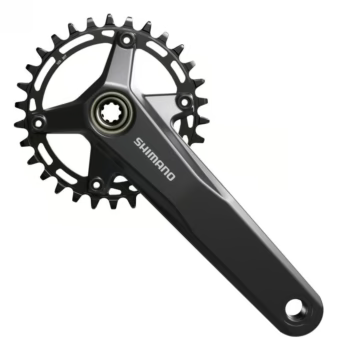
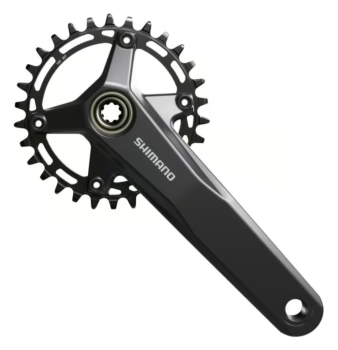
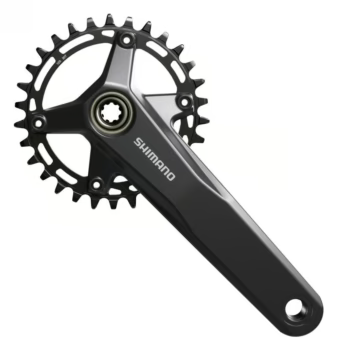
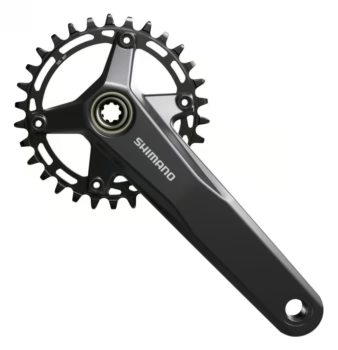

Cranks
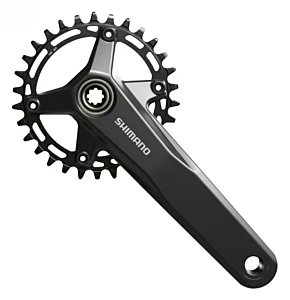
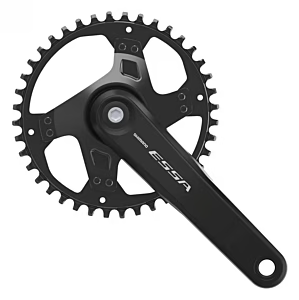
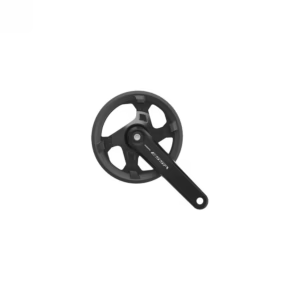
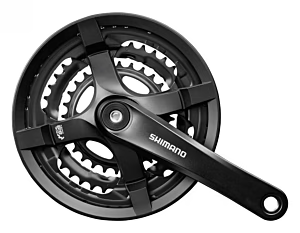
Bicycle cranks and cranksets for road bikes, mountain bikes, gravel, trekking and e-bikes – discover high-quality cranks from Shimano, SRAM, Race Face and other top brands.
In this category you will find bicycle cranks and cranksets for every application – from lightweight road bike cranks to robust MTB cranks and reliable trekking cranks. Whether you are looking for a 1x crank for your gravel bike, a compact 2x crank for the road or a 3x crank for touring: brands such as Shimano, SRAM, Campagnolo, Race Face, FSA, Rotor, Hope and Praxis Works offer a wide selection of cranks with different gear ratios, bolt circle diameters and axle standards – with fast delivery throughout Switzerland and the Principality of Liechtenstein.
The crankset is the central component of your drivetrain and influences power transmission, gearing and riding comfort in equal measure. Whether you are looking for a lightweight carbon crank for racing, a stiff aluminium crank for off-road use or a low-maintenance crank for everyday use: the selection ranges from proven series such as Shimano 105, Ultegra and Deore to SRAM Rival and GX Eagle, Campagnolo Record and special cranks from Rotor with oval chainrings. This means that as a road cyclist, mountain biker, gravel enthusiast or tour rider, you will find the crank that suits your riding style, your budget and your existing drivetrain.
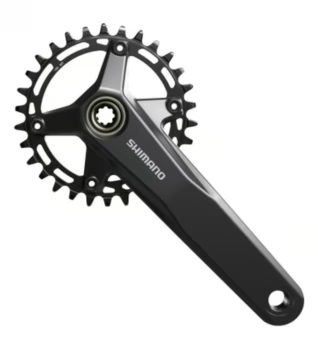
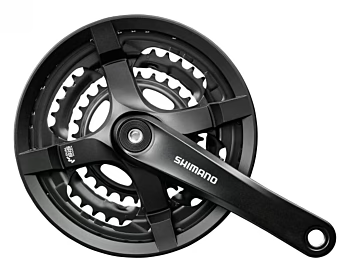
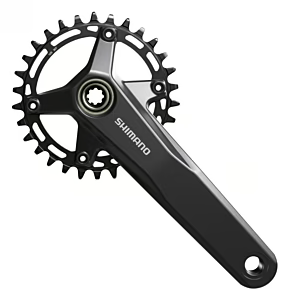
For road bikes, compact 2x cranks with 50/34 or 52/36 teeth are suitable, offering a balanced gear ratio for flat terrain and climbs. In the mountain bike sector, 1x cranks with chainrings between 30 and 34 teeth dominate, ensuring maximum ground clearance and chain retention. For gravel bikes, both 1x and 2x cranks with a wide gear range have proven themselves. In the trekking and touring bike sector, 3x cranks are still a popular choice when a particularly wide range of gears is required.
When buying a new crank, several technical factors play a role. The axle standard (Shimano Hollowtech II, SRAM DUB, GXP, BB30 or PF30) must match the bottom bracket of your frame. The bolt circle diameter (BCD) determines which chainrings you can mount – common measurements are 110 mm for compact cranks and 130 mm for classic road cranks. In terms of material, you have the choice between lightweight carbon for ambitious riders and robust aluminium for everyday use. Also pay attention to the crank length, which is typically between 165 mm and 175 mm and should be matched to your leg length and your riding style.
| Brand | Known for | Ideal for | Price segment |
|---|---|---|---|
| Shimano | Wide range, reliable technology | Road, MTB, trekking, everyday | Entry-level – Premium |
| SRAM | 1x drivetrains, innovative standards | MTB, gravel, road | Mid-range – Premium |
| Campagnolo | Italian premium quality | Road bike enthusiasts, traditional riders | Premium |
| Race Face | Robust MTB cranks | Mountain bike, enduro, trail | Mid-range – Premium |
| FSA | Versatile cranks, good value for money | Road, MTB, fitness bikes | Entry-level – Mid-range |
| Rotor | Oval chainrings, modular systems | Performance-oriented riders, triathlon | Mid-range – Premium |
| Hope | CNC-machined cranks from Great Britain | MTB, custom builds | Premium |
| Praxis Works | Chainrings and cranksets | Road, gravel, upgrade projects | Mid-range – Premium |
The category is aimed at road cyclists, mountain bikers, gravel fans, tour riders and commuters in Switzerland who are looking for a new crankset – whether as a replacement for a worn crank, as an upgrade for an existing drivetrain or as part of a complete new build. Workshops and mechanics will also find suitable cranks for different axle standards and frames here.
When buying a crank, it is worth paying attention not only to brand quality but also to compatibility with your bottom bracket, the correct bolt circle diameter and the right crank length. High-quality cranks from established manufacturers offer durable splines, precise chainring mounts and high stiffness for efficient power transmission. Many cranks can be installed yourself with standard tools – a torque wrench is expressly recommended.
Please complete your information below to login.
Sign In
Create New Account