
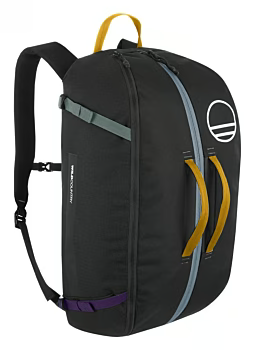

Climbing backpacks
In this category you will find climbing backpacks for alpine climbing, sport climbing, bouldering and multi-day tours – from lightweight daypacks to spacious models for demanding alpine adventures. Brands such as Mammut, Osprey, Deuter, Black Diamond and Petzl offer a wide selection of robust, ergonomic and functional climbing backpacks – with fast delivery throughout Switzerland and the Principality of Liechtenstein.
Whether you are looking for a lightweight backpack for sport climbing on rock, a robust alpine backpack for high-altitude tours, or a compact bouldering backpack for daily use: The range covers different sizes, carrying systems and feature sets. Climbing backpacks are characterised by a slim fit, numerous attachment options for rope, carabiners and ice tools, as well as well-thought-out compartment layouts – ideal for climbers who value function and comfort.
For sport climbing, compact backpacks with a volume of 18 to 30 litres are suitable, offering enough space for rope, quickdraws and climbing shoes without being a nuisance on the approach. For alpine tours and multi-day adventures, models with a volume of 30 to 45 litres are ideal – they offer sufficient storage space for additional clothing, provisions and bivy equipment. Bouldering backpacks are particularly lightweight and minimalist, perfect for transporting crash pads, shoes and chalk.
Modern climbing backpacks rely on a combination of durable nylon or polyester with a water-repellent coating. Reinforced base sections, abrasion-resistant materials in high-stress areas and lightweight aluminium frames ensure durability and stability. Ergonomic carrying systems with padded hip belts, pre-shaped shoulder straps and breathable back padding increase carrying comfort – even with heavy equipment and long approaches.
| Brand | Known for | Ideal for | Price range |
|---|---|---|---|
| Mammut | Swiss alpine equipment, robust backpacks | Alpine climbing, high-altitude tours | Mid – Premium |
| Osprey | Ergonomic carrying systems, high comfort | Multi-day tours, long approaches | Mid – Premium |
| Deuter | Durable all-rounders, good ventilation | Sport climbing, hiking | Entry – Mid |
| Gregory | Precise fit, well-thought-out compartments | Long approaches, demanding tours | Mid – Premium |
| Black Diamond | Technical climbing equipment, functional backpacks | Alpine and sport climbing | Mid – Premium |
| Petzl | Lightweight, minimalist climbing backpacks | Technical climbing, ice tours | Mid – Premium |
| Edelrid | Robust construction, sustainable materials | Sport climbing, bouldering | Mid |
| The North Face | Versatile outdoor equipment, all-rounder | Universal use, travel | Mid – Premium |
The category is ideal for sport climbers, alpinists, boulderers and mountaineers in Switzerland looking for a specialised backpack for their tours. Beginners who are just starting out climbing will also find suitable entry-level models here. Thanks to the wide selection of brands and sizes, the right climbing backpack is available for every requirement and every tour profile – from a short after-work session on the rock to a demanding multi-day alpine tour.
When buying a climbing backpack, it is worth paying attention to high-quality materials, clean workmanship, robust zips and a well-thought-out carrying system. Models from established manufacturers are designed for durability and offer thoughtful safety features such as signal whistles, reflective elements and stable attachment points for climbing equipment.
Please complete your information below to login.
Sign In
Create New Account