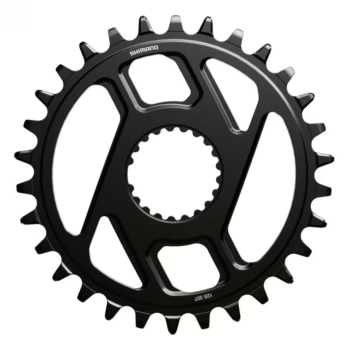
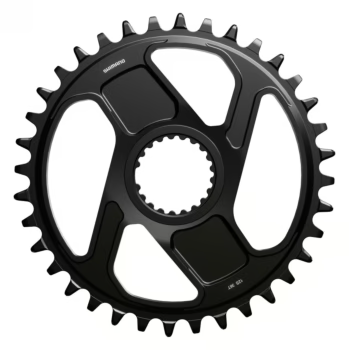
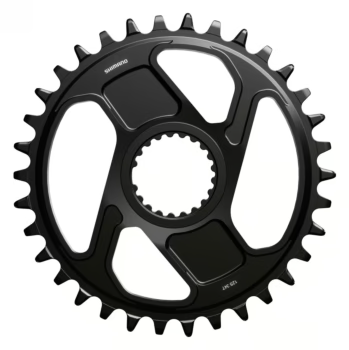
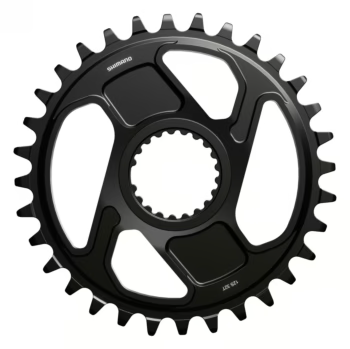
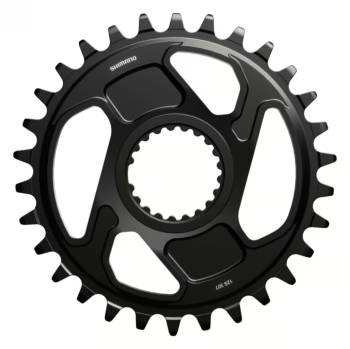
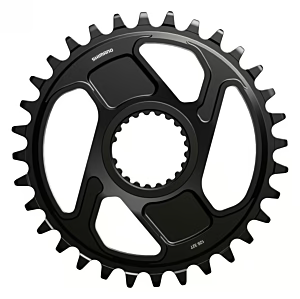
In this category you'll find chainrings for bicycles in various sizes, bolt circle diameters and designs – from 1x chainrings for mountain bikes and gravel bikes to 2x and 3x systems and high-quality replacement chainrings for road bikes, trekking bikes and e-bikes. Brands such as Shimano, SRAM, Campagnolo, Race Face, Wolf Tooth, Absolute Black, Rotor and FSA offer a wide selection of bicycle chainrings online in Switzerland – with fast delivery throughout Switzerland and the Principality of Liechtenstein.
Buy Chainrings Online – for Road Bike, MTB & Trekking
Whether you want to replace a worn chainring, optimise your gear ratio or convert to a 1x drivetrain: the selection covers models with different tooth counts, bolt circle diameters and materials. This allows road cyclists, mountain bikers, commuters and tour riders to quickly find the right chainring for their crankset and riding style – conveniently from home.
Chainrings by Application
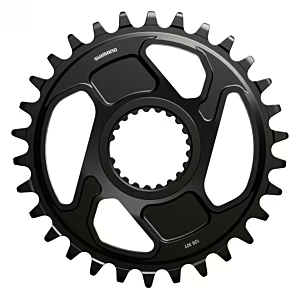
For road bikes, large chainrings with 50 to 53 teeth and a bolt circle diameter of 110 mm or 130 mm are suitable. In the mountain bike segment, smaller models with 28 to 36 teeth and BCD measurements such as 104 mm or 96 mm are typical. For trekking and city bikes, 2x and 3x cranksets with steel or aluminium chainrings offer a durable, everyday solution. Gravel bikes increasingly rely on 1x chainrings with a narrow-wide profile, which provide reliable chain retention even on rough terrain.
Changing a Chainring – Bolt Circle, Tooth Count & Compatibility
When changing a chainring, three measurements are crucial: the bolt circle diameter (BCD), the number of mounting arms and the desired tooth count. Common BCD measurements are 110 mm, 130 mm, 104 mm and 96 mm. Also ensure compatibility with your chain – narrow chains for 11-speed or 12-speed drivetrains require appropriately matched chainrings to ensure clean shifting and secure chain guidance.
This category is ideal for road cyclists, mountain bikers, gravel enthusiasts and everyday cyclists in Switzerland who want to replace their chainring, adjust their gear ratio or upgrade to a modern 1x drivetrain. Workshops and DIY mechanics will also find branded chainrings here for common cranksets and groupsets such as Shimano, SRAM and Campagnolo.
Quality, Materials & Durability
High-quality chainrings made of aluminium or steel offer a long service life and clean shifting. Aluminium chainrings are lighter and are often given protective coatings against wear, while steel chainrings are particularly robust and suitable for frequent riders and trekking bikes. Pay attention to chain compatibility – 11-speed and 12-speed chains require special narrow chainrings.
Frequently Asked Questions
What is a chainring and what function does it have?▾
The chainring is the front sprocket on the bicycle drivetrain on which the chain runs. It transfers the pedalling force from the crank to the chain and thus drives the rear wheel. Depending on the number of teeth and design, it influences the gear ratio, cadence and riding characteristics.
Which chainring sizes fit my bike?▾
The right chainring size depends on the intended use, the crank and the groupset. On road bikes, larger chainrings with 50 to 53 teeth are common, while mountain bikes use smaller ones with 28 to 36 teeth. Compatibility with the bolt circle diameter, the crank and the chain is essential.
How do I find the right chainring for my crank?▾
Check the bolt circle diameter (BCD), the number of arms and the position of the mounting holes on your crank. Use these values together with the desired tooth count and intended use to find a compatible chainring.
What does the bolt circle diameter (BCD) mean for chainrings?▾
The bolt circle diameter – also called BCD (Bolt Circle Diameter) – indicates the diameter of the circle on which the chainring mounting bolts sit. Common measurements are 110 mm, 130 mm or 104 mm. Only if the BCD of the chainring and crank match can the parts be mounted.
When should I replace my chainring?▾
A chainring should be replaced when the teeth look pointed, hook-shaped or heavily worn, the chain slips or the drivetrain runs unevenly. Replacement is also advisable after a chain break or if visible damage is present, in order to avoid consequential damage to the chain and cassette.
Which material is best suited for chainrings?▾
High-quality chainrings are made of aluminium alloys or steel. Aluminium is lighter and is often used in road bike and MTB applications, while steel is more durable and frequently used on trekking or city bikes. Some premium models use titanium or coated surfaces for maximum durability.
What is the difference between 1x, 2x and 3x chainrings?▾
1x drivetrains have only one chainring and are particularly low-maintenance and lightweight – ideal for mountain bikes and gravel bikes. 2x systems offer two chainrings with a balanced gear range, while 3x cranksets with three chainrings provide very fine gradation and a wide range for trekking and touring bikes.
How do I install a chainring correctly?▾
To change the chainring, remove the crank bolts with a suitable hex or Torx key, take off the old chainring and fit the new one in the correct orientation. Make sure that all bolts are tightened evenly and to the specified torque to avoid damage.
Subscribe to the newsletter
New arrivals, promotions and exclusive offers — straight to your inbox.


Please complete your information below to login.
Sign In
Create New Account