

Tennis balls
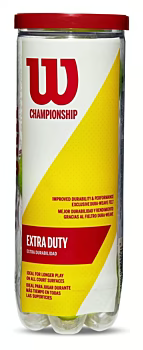
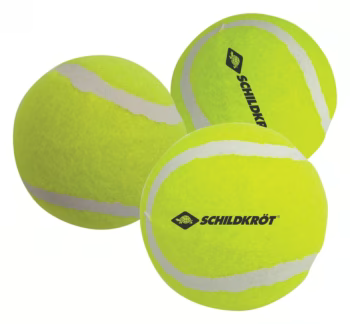
In this category, you'll find tennis balls for training, competition and recreational play – from pressurized tournament balls to pressureless training balls and special children's balls. Whether you're looking for the right balls for clay courts, hard courts or indoor play, you'll find them here. Top brands such as Wilson, Dunlop, Head, Babolat, Slazenger, Penn, Tecnifibre and Yonex ensure consistent bounce, good visibility and long durability. Order your tennis balls online now and benefit from fast delivery throughout Switzerland.
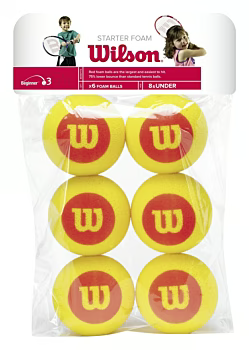
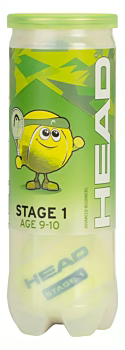
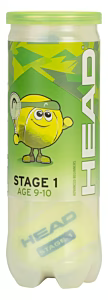
Whether you are a beginner, an ambitious club player or a tournament player – the right tennis balls significantly influence playing feel, ball control and point success. In our range, you'll find balls for every level of play: slow Stage 3 balls for kids and beginners, pressureless balls for training with a ball machine, or particularly durable pressurized balls for match play. Thanks to the wide variety of brands, you can filter specifically by your preferred manufacturer or get inspired by the selection.
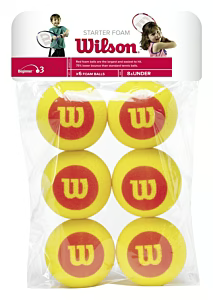
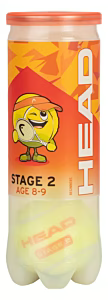
Pressurized tennis balls consist of a rubber core with internal overpressure and offer a lively bounce that is especially appreciated by tournament players. However, they lose pressure over time and should therefore be stored in airtight containers. Pressureless tennis balls have no internal overpressure and maintain their playing characteristics through a thicker rubber membrane. They retain their bounce properties over a longer period and are ideal for training and ball machines. Stage balls are specially developed for children and beginners entering tennis. They are slower and often slightly larger to enable longer rallies and early success experiences.
Not every ball plays the same on every surface. For clay courts, balls with a more resistant felt coating are often offered, which absorb less water and keep their bounce height stable. On hard courts, slightly firmer pressurized balls with precise bounce behavior are convincing. Indoors, a ball with good visibility and a not-too-fast bounce is required. Many manufacturers therefore label their balls with indications such as "All Court", "Clay" or "Indoor". This way, you can find the right choice directly for your preferred surface.
| Brand | Known for | Ideal for | Price Range |
|---|---|---|---|
| Wilson | US Open ball, high-quality pressurized balls | Tournament players, hard court | Premium |
| Dunlop | Australian Open ball, Fort series | Club players, all-round | Mid-range |
| Head | Pressureless balls, ATP ball | Training, ball machines, recreational sports | Entry-level – Mid-range |
| Babolat | French Open ball, clay court specialist | Clay court players, tournaments | Premium |
| Slazenger | Wimbledon ball, grass court | Grass court players, tradition | Premium |
| Penn | Pressurized training balls, Championship series | Recreational and club players | Mid-range |
| Tecnifibre | X-One technology, touch and durability | Advanced players, tournament players | Premium |
| Yonex | Precise pressurized balls, consistent bounce | All-court players, quality-conscious | Premium |
The selection of tennis balls is aimed at tennis players of all skill levels, at parents looking for suitable children's balls for their youngsters, at coaches and clubs who want to order balls in larger quantities, and at recreational athletes who value good playing characteristics. Whether you are a beginner or play at tournament level – here you'll find the ball that suits your game.
When buying tennis balls, it's worth paying attention to ITF approval. Balls with the ITF seal meet international tournament standards and guarantee consistent bounce, size and weight. Felt quality and seam processing also play a role in longevity. High-quality balls retain their shape and bounce over many hours of play, while budget options can lose performance more quickly. With brands like Wilson, Dunlop, Head and Babolat, you get balls that meet the high demands of Swiss tennis.
Please complete your information below to login.
Sign In
Create New Account